Rediscovering Montessori: Wisdom in the Changing Season
As the air turns crisp and the leaves begin to fall, children’s curiosity stirs with the change in the season. For Montessori educators, this spark of interest becomes opportunity. Dr. Maria Montessori understood over a century ago that nature is a child’s first and most powerful teacher.
Montessori’s View: The Outdoor World as Classroom
Maria Montessori wrote, “There must be provision for the child to have contact with nature; to understand and appreciate the order, the harmony, and the beauty in nature.” She saw the natural world as an integral part of learning — a living classroom filled with textures, colors, and sounds–stimuli that awaken the senses.
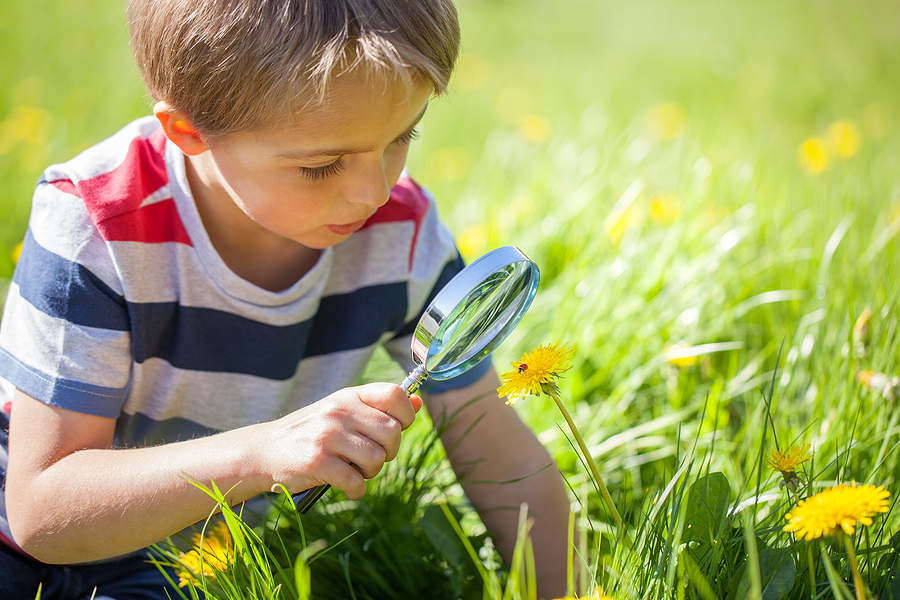
Our Montessori programs use the outdoors as an extension of the classroom–every encounter with nature becomes a lesson. Measuring the depth of a puddle after rain turns into a math experiment. Sorting stones by texture or color introduces geology. Listening for bird calls becomes a study in biology and animal behavior. Watching an ant nest or a spider repairing its web reveals principles of ecology and architecture. When a child pauses to feel the rough bark of a tree or trace the path of a beetle through the soil, they’re practicing observation and scientific inquiry.
Learning Through the Senses
Montessori outdoor learning emphasizes hands-on and sensory learning, and there is no richer experience than the natural world. A child sifts sand through their fingers. They trace the spiral of a seashell. These simple actions build neural connections that a worksheet never could. Nature’s lessons are immediate and authentic. Children observe cause and effect. They contrast change with permanence.
Cultivating Stewardship and Respect
When children spend regular time in nature, they develop a deep respect for the living world. They notice patterns: leaves turn from green to gold, mushrooms emerge after rain, and geese flying in V-formations across the sky. Montessori called this cosmic education. These peak experiences help children to reflect on themselves as part of a vast, harmonious system.
In the New School’s classrooms, students experience this harmony through simple but meaningful activities. They might water the plants in class or tend our garden beds. These moments foster care and gratitude. They show children that caring for the world begins with small, mindful acts.
Autumn: The Ideal Montessori Season
Autumn is the perfect season to illustrate Montessori outdoor learning principles. When children learn from nature, they internalize wonder–a lesson just as valuable as academic knowledge. Montessori believed that the child who learns in harmony with Earth becomes an adult who protects it. When we encourage children to learn with all their senses engaged, we awaken the joy of discovery that endures for life.
Closing Reflection
Nature has always been central to our Montessori philosophy, as it nurtures curiosity and care for the environment. Several years ago, this belief inspired us to purchase the natural area of land surrounding the school, ensuring future generations have the opportunity to learn outdoors. Today, we are investing in upgrades to these areas, transforming them into vital educational and recreational resources for all students and families—-a commitment you can follow in our campus improvement updates. These efforts reflect our conviction that direct experiences in nature not only enrich academic growth and social development, but are the foundation for our children’s future.
➡️ Next week: Part 2 of our When Nature Becomes the Teacher series– The Science of Outdoor Learning, exploring how modern research confirms what Montessori knew all along.
🌟 At The New School Montessori Center, outdoor learning is part of every day. We invite you to see our students exploring nature’s classroom. Schedule a tour today.
References & Further Reading (Part 1)
- Montessori, M. (2013). Nature in Education. Montessori-Pierson Publishing. https://files.eric.ed.gov/fulltext/EJ1078035.pdf
- Lillard, A. S. (2013). Playful Learning and Montessori Education. American Journal of Play, 5(2), 157–186. https://files.eric.ed.gov/fulltext/EJ1077161.pdf
- AMI Montessori Outdoor Learning
- Greenspring Montessori: Outdoor Environments
- The Montessori Foundation – Nature as Teacher