Simple Ways to Nurture Your Child’s Connection to Nature This Season
With all the evidence in hand, the question becomes: how do we make outdoor learning part of everyday life? Autumn provides countless ways to bring Montessori principles outdoors — at school, at home, and in the spaces in between.
In the Montessori Classroom: Indoors and Out
Our teachers might turn almost any lesson into a nature-based experience:
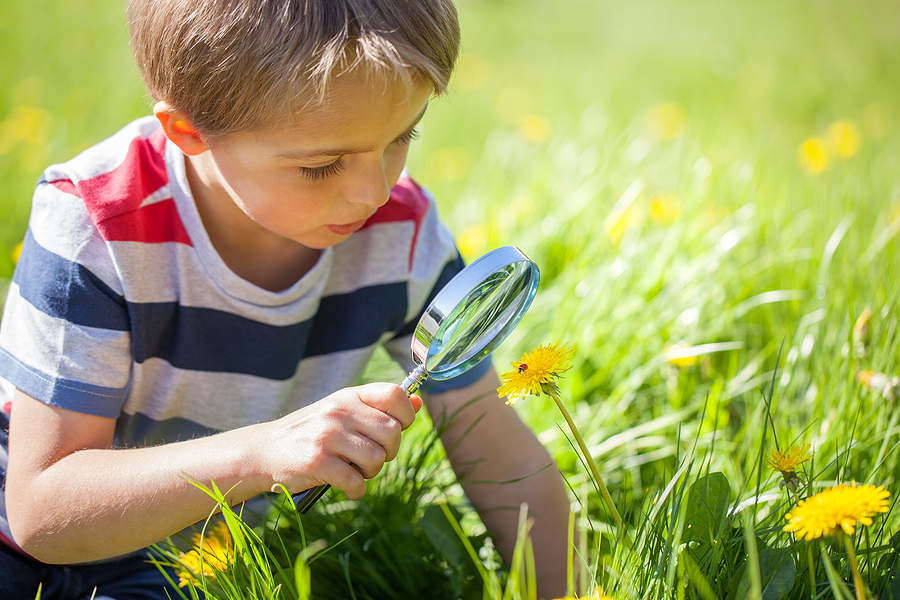
- Observation walks to collect leaves, seeds, and soil samples.
- Journaling outdoors to combine literacy, science, and mindfulness.
- Weather tracking that turns barometers and thermometers into real-world data tools.
- Gardening projects connecting botany, ecology, and responsibility.
These activities reinforce classroom content while allowing children to engage all their senses, encouraging them to move and inspiring them to wonder. The outdoors becomes a living textbook and helps children create their own connections between the experience of outdoors and learning indoors. It helps children connect their inner imagination with their outer actions and activities.
For Families at Home
Parents don’t need acres of land or elaborate plans. Small, consistent experiences have lasting impact. Try:
- Evening walks where children name the colors they see.
- Backyard experiments — measuring rainfall, charting bird visits, or planting bulbs.
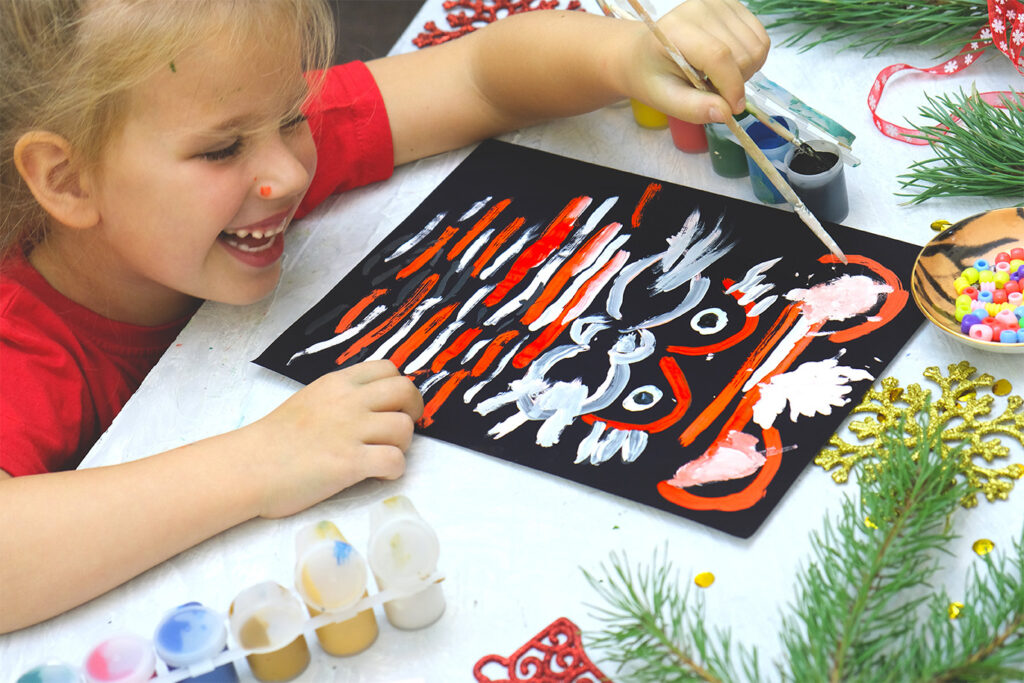
- Creative projects — leaf rubbings, pinecone art, or homemade compost.
- Reflection rituals — sharing one “new thing discovered” at dinner each night.
The goal is not to “add one more thing” to family life, but to reframe what’s already available — the backyard, the park, the changing sky — as a place of learning.
The Social and Emotional Dimension
Outdoors, social hierarchies soften. Children collaborate naturally as they climb, build, and explore. Those who may struggle in structured classrooms often shine in outdoor settings where creativity and leadership take new forms. Risk assessment, teamwork, and perseverance are practiced organically — all critical skills for personal growth.
Gratitude and Stewardship
Autumn naturally invites gratitude — for harvests, warmth, and community. When children notice the cycles of giving and renewal in nature, they internalize empathy and responsibility. A Montessori approach nurtures this awareness not through lectures but through lived experience: hands in soil, eyes on the horizon, heart connected to the land.
Closing Reflection: A Season For Today, A Perspective for Life
Outdoor learning isn’t just a seasonal event. The process of learning outdoors instils a mindset of curiosity and respect that can last all year — if not a lifetime. Yet autumn’s rich colors and cooler air offers the perfect invitation to begin.
“The land is where our roots are. The children must be taught to feel and live in harmony with the Earth.” — Maria Montessori
When we follow Montessori’s wise guidance, every walk, every question, and every observation becomes an act of learning — and of love.
 Further reading: For a more in-depth read about the benefits of nature, read the previous articles of our When Nature Becomes the Teacher series
🌟This season, see how Montessori transforms curiosity into care. Join us for a campus visit and experience our outdoor classrooms in full color. Schedule a tour today.
References & Further Reading (Part 3)
These references are formatted to match your example and ready to paste into HTML:
References & Further Reading (Part 3)
- The Montessori Children’s House. (2025). The Montessori Children’s House: The Role of Outdoor Play in Montessori Learning. Retrieved December 12, 2025, from https://www.themontessorichildrenshouse.net/blog/the-role-of-outdoor-play-in-montessori-learning
- Wonderland Montessori. (2025). Wonderland Montessori: Where Learning Grows – The Montessori Approach to Outdoors. Retrieved December 12, 2025, from https://www.wonderlandmontessori.com/where-learning-grows-the-montessori-approach-to-outdoors
- Thimble and Twig. (2025). Thimble and Twig: Nature-Based Educational Activities. Retrieved December 12, 2025, from https://thimbleandtwig.com/nature-based-learning-educational-outdoor-activities/
- Marlboro Montessori Academy. (2025). Marlboro Montessori Academy: Nature and Outdoor Learning in Montessori Education. Retrieved December 12, 2025, from https://www.marlboromontessoriacademy.com/detailsblog/unlockthepowerofnatureoutdoorlearninginmontessorieducation
- American Psychological Association. (2020). Nurtured by Nature – The Science of Outdoor Time. Retrieved December 12, 2025, from https://www.apa.org/monitor/2020/04/nurtured-nature
- National Association for the Education of Young Children. (2019). Outdoor Play Is Essential. Retrieved December 12, 2025, from https://www.naeyc.org/resources/pubs/yc/may2019/outdoor-play-is-essential